Posts Tagged ‘gospel’
On the Life of Pi, story telling, and the truth
 With one voice, philosophers and theologians throughout intellectual history have affirmed the fundamental religiosity of man. In Yann Martel’s book Life of Pie, the young boy, Piscine Molitor Patel, embraces this impulse in spades—becoming (unbeknownst to his parents) a follower of Christ, Krishna, and Allah. The first part of the book paints a portrait of “Pi” as a gentle, clean hearted, and wise worshipper of the divine as well as a contented zookeeper’s son.
The American Idol Audition, Ph.D. Dissertation Defense, and the Human Longing for Quest
 My favorite part of American Idol is the first few weeks. The Idol Machine travels around the country and people come out by the thousands to stand before the judges and sing their heart out. The goal is the get the coveted yellow piece of paper and to be told “Your going to Hollywood.” As I watched the show these past few weeks (yes, I admit it), it dawned on me that there are a lot of similarities between an American Idol audition and a Ph.D. defense. I’ve been through one, and I’ve watched the other for a while now. As I watch Idol, a funny thing happens to me, I find emotions reminiscent of the day when I defended my dissertation arise within the contestants and sometimes within me. The audition and the defense are of the same piece:
Traditional Theology, Apologetics, and the Gospel: Or “Should we be traditional theologians?”
 In an interesting article by the philosopher Scott Shalkowski, he asks, “How much stock should we invest in traditional theology?”[1] I think the answer to this question has interesting implications related to apologetics, the gospel, and the nature of theology.
C.S. Lewis, the Moral Argument for God, and the Gospel
 In the conclusion of his famous Critique of Practical Reason, Kant famously said, “two things fill the mind with ever new and increasing admiration and reverence… the starry heavens above me and the moral law within me.” Years later, C.S. Lewis picks up this Kantian insight and formulates an argument for God based on the reality of a Moral Law.
The Supremacy of Christ in a Postsecular World
 Over the last 50 years, with the rise of (what sociologists call) secularism—that is, an ideology promoted by devotees (secularists) who encourage free-thinking people everywhere to work for religion’s demise–it was predicted that belief in God would soon be a thing of the past.
The “Unforgivable Sin” and understanding the Bible
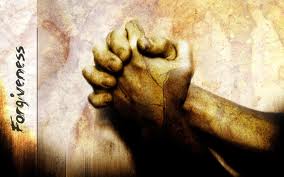 Recently, I was asked to preach on Matthew 12:30-32—the passage where Jesus talked about the “unforgivable sin” and “Blasphemy against the Holy Spirit.” After my initial shock at being asked to preach on that passage, I realized that I had questions of my own about it. What is the deal with this passage? What is the unforgivable sin? And more to the point—have I committed it?
In Praise of Personal Retreats
 I just returned home from a mini-personal retreat (36 hours) at the St. Francis Springs Retreat Center near Greensboro, North Carolina. I’m not one to typically “get away.” I’m a “do”er, not a “be”er, or so I say to myself. Add to this, the fact that we leave for a month of travel tomorrow—how can I possibly afford to get away for 2 days? How can I not?
Why Religion Won’t Go Away
 We are witnessing a shift away from the secularization (the diminishing influence of religion) of the 19th and 20th century. The 21st century is shaping up to be postsecular.
The Heresy of Orthodoxy
 I’ve been reading Andreas Kostenberger’s and Michael Kruger’s The Heresy of Orthodoxy. This book is a scholarly response to a view that has been recently popularized by Bart Ehrman and Elaine Pagels, a view originally advanced by the German theologian Walter Bauer (1877-1960).
Why be good? Plato and the Gospel
 In Plato’s Republic, one of the central questions is Why be good? On the face of it, it seems that being immoral or unjust is more profitable than being good. If so, then no one is willingly good—and perhaps then we have found a pragmatic reason for religion—fear of divine wrath keeps the immoral masses from perpetrating evil acts. I say this is exactly backwards—and Plato’s own answer to his question points us in the right direction.






 Fueled by the conviction that stories sustain us because we were made to be nourished on the good, the true, and the beautiful, I determined to read one fiction book a month for this past year. And I read some very good stories! In addition to fiction, I have benefitted greatly this year from some solid works in philosophy, theology, biography, and spiritual formation. Without further ado, here are my favorite books read in 2023. As is custom, in my book log, I record the book title, author, and date completed, along with a one sentence description. This has been my practice since 2009. My book log now includes 635 entries. This year I read 43 books.