BRILLIANT AND BEAUTIFUL BLOG
Is Christianity or Islam the Greatest Religion?
 Given the amount of evil perpetrated by followers of Islam worldwide, I was quite surprised to read in Stephen Prothero’s introduction to his book God is not One that he thinks Islam, and not Christianity, is the greatest religion in the world. In this post, I’ll explain his reasoning and then share why I think he is wrong.
Five Things I’ve learned from C. S. Lewis
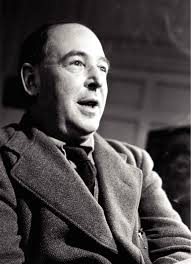 I’ve recently finished reading George Sayer’s wonderful biography on C. S. Lewis entitled Jack. I’ve always been drawn to Lewis’ writings. His fictional stories awaken my reason and imagination, urging me “further up and further in” to the mysteries and wonder of God and this God-bathed world. His nonfiction helps me see more clearly the beauty of Christ and the folly of materialism, idolatry, and false loves.
How Reading Enlarges Us: Or My Favorite Books of 2014
 I admit it. I love reading books. Not those enlightened by pixels or advanced with the swipe of a finger, but old fashion paperbacks. I love the feel of flipping a completed page, underlining favorite passages, and writing notes in the margins. This year was a banner year in terms of books read and diversity of topics explored, helped along by new course preparation at the seminary where I teach (courses from ancient philosophy to world religions to the Christian virtues made for a diverse reading list).
Urban Apologetics
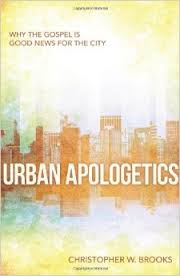 Typically, books on apologetics are either broadly topically driven (e.g., works on historical apologetics, scientific apologetics, philosophical apologetics, etc.) or narrowly topically driven (e.g., books refuting Mormonism, responding to Islam, answering the new atheists, etc.). What is unique about Christopher Brooks’ new book on apologetics is that it is rooted in place—urban cities—and the specific challenges to the Christian faith found therein. In writing Urban Apologetics, Brooks is attempting to fill a void he perceives in the apologetic literature, for “what is . . . desperately lacking are books that equip urban Christians to take the teaching of Christ and apply them to the most important and defining issues facing our communities and society.”
C. S. Lewis, The Great Divorce, and Solid People
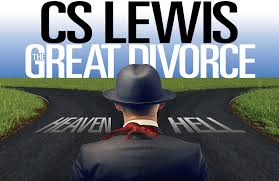 This past weekend, my wife and I went to the theatrical performance of C. S. Lewis’s The Great Divorce in Dallas. It was wonderful, and if the play is coming to your city, I highly recommend you see it. As my wife described it, seeing the book acted out on stage helps one to feel what Lewis was communicating with words. In this post I want to highlight some of my favorite Lewisian insights from the book (and play).
Primer on Divine Goodness (Part 2: Philosophical Reflection)
 In my last post, I considered the teachings of Scripture concerning the character of God. The Bible is clear that God himself is good, the source of all good things, and good to all that He has made. In light of that discussion, let us define divine goodness as following:
A Primer on Divine Goodness (Part One: Theological Reflection)
It is a common theistic claim that God is good. But what is the justification for such a claim, and further how is it to be understood? In this post, I’ll consider what Scripture has to say about divine goodness. In my next post, we’ll put the resultant conception of divine goodness under philosophical scrutiny.
A Spiritual History of the World
 In Peter Kreeft’s excellent little book Back to Virtue, he attempts to delineate the spiritual history of the (Western) world in 10 steps. I think the picture Kreeft develops is insightful and provides a helpful perspective in which to understand our present times. In this post, I’ll briefly sketch Kreeft’s history and offer a few thoughts of my own at the end.
God-so far yet so near
 The most fundamental distinction of all reality is that between Creator and creature. He makes, we are made; he is original, we are derivative; he is everlasting, we are temporal; he is infinite, we are finite; he exists a se, we ab alio.
Two Roads to Live On
 Thoughtful observers are in agreement that our culture is sick. We are morally confused. We are cracked, violated, and vicious. Don’t get me wrong. I don’t think we’re much worse than any previous culture. The difference between earlier cultures and ours is not in terms of our lack of virtue, but the lack of knowledge of virtue. As Peter Kreeft so boldly puts it, we are the most freakish culture in the history of the west—because we have loosed our lives from the pursuit of God—and we are the weakest culture in the history of the west—because we no longer act based on objective moral principles, and thus have no objective standard with which to judge and no objective source of power for change.




 Fueled by the conviction that stories sustain us because we were made to be nourished on the good, the true, and the beautiful, I determined to read one fiction book a month for this past year. And I read some very good stories! In addition to fiction, I have benefitted greatly this year from some solid works in philosophy, theology, biography, and spiritual formation. Without further ado, here are my favorite books read in 2023. As is custom, in my book log, I record the book title, author, and date completed, along with a one sentence description. This has been my practice since 2009. My book log now includes 635 entries. This year I read 43 books.